Crypto-backed loans have emerged as a compelling financial tool for digital asset holders, especially those with substantial portfolios. They offer a way to access liquidity without liquidating your crypto positions, which can be particularly appealing in volatile markets. However, borrowing against your crypto isn’t a one-size-fits-all solution. Just as smart entry points are crucial in trading, knowing when you should not take a crypto loan can save you from exacerbating risk and compounding financial stress.
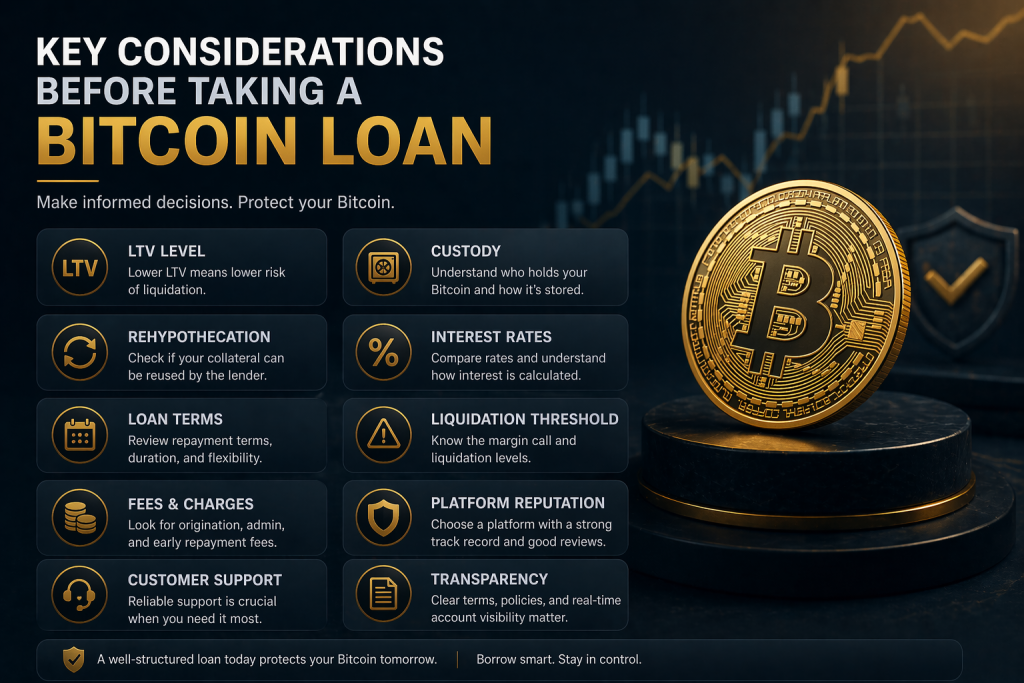
A crypto loan becomes dangerous when market volatility pushes the loan-to-value (LTV) ratio toward critical thresholds such as ~75% (margin call) and ~85–90% (liquidation).
This means the decision to avoid borrowing is not based on market sentiment alone, but on how likely the loan structure is to survive price declines.
Understanding the Context: The Role of Crypto Loans in Your Financial Strategy
Crypto loans enable borrowers to pledge their crypto assets as collateral to access fiat or stablecoin loans. For holders with $50K+ in crypto, this can unlock capital without triggering taxable events or selling during market dips. Yet, this convenience comes with inherent risks tied to market volatility, collateral liquidation, and loan terms.
Using crypto loans for non-productive spending increases risk because the borrowed funds do not generate returns or improve cash flow. This means the borrower must rely entirely on collateral stability to maintain the loan, making the position vulnerable if market conditions deteriorate Hence a clear reason to not take a crypto loan
The key factor is not the size of the loan, but the starting LTV and how much price movement the collateral can absorb. A loan opened at 30% LTV can tolerate significantly larger market declines than one opened at 60%, even if both loans are identical in size.
This difference determines whether the borrower has time to react or is forced into liquidation.
Core Reasons to Reconsider Taking a Crypto Loan
Borrowing during a market downturn becomes risky when declining collateral values push LTV toward margin call levels. For example, a loan that starts at 50% LTV can approach 75% LTV with a relatively moderate price drop, leaving little room for recovery before forced action is required. at this point borrowers are advised to hold up and not take a crypto loan
In contrast, a lower starting LTV provides a larger buffer, reducing the likelihood that volatility alone will trigger liquidation.
First, when your crypto portfolio is already under significant stress due to price downturns, adding a loan could accelerate losses. Crypto assets are notoriously volatile; if your portfolio is trending downward or feels precarious, adding debt can increase liquidation risk.
Second, loans taken for discretionary spending or non-productive uses — such as consumer purchases or lifestyle inflation — are often a warning sign. The best utility of a crypto loan is to maintain or enhance your financial position, not undermine it by funding expenses that don’t generate returns or improve your cash flow.
Third, unclear or unfavorable loan terms—high interest rates, inflexible repayment schedules, or insufficient collateral management options—should raise red flags. These conditions increase the likelihood of forced liquidations and unmanageable debt.
Scenario-Based Thinking: When Crypto Loans Make Less Sense
Consider a borrower entering a loan during a volatile or declining market. If collateral values drop by 30–50%, the LTV can rise rapidly toward margin call levels (~75%), reducing the borrower’s ability to manage the position. In contrast, delaying the loan until market conditions stabilize allows the borrower to start at a lower LTV, increasing the distance from liquidation levels and improving the chances of long-term survival.
Entering a loan under these conditions means the borrower begins closer to risk thresholds, increasing the probability of forced liquidation during continued volatility.
A portfolio heavily concentrated in volatile assets increases risk because all collateral may decline simultaneously. This raises LTV across the entire position, reducing the effectiveness of diversification and increasing the likelihood of margin calls during market downturns. Hence a clear reason to not take a crypto loan
Another scenario is if your portfolio allocation is already heavily weighted toward volatile assets without sufficient diversification. Adding loan obligations in this context increases financial risk exponentially, especially if the loan’s duration doesn’t align with your risk tolerance or investment horizon. At this point borrowers a advised to tighten their positions and not take a crypto loan
Using crypto loans to cover recurring expenses creates structural risk because repayment depends on future market performance rather than stable income. If prices decline instead of rising, the borrower may be forced to add collateral or liquidate assets to maintain the loan. Hence another reason to not take a crypto loan
Unfavorable loan terms—such as high interest rates or inflexible repayment structures—reduce the borrower’s ability to respond to rising LTV. In volatile markets, this lack of flexibility can accelerate liquidation risk by limiting options to add collateral or reduce exposure. This makes it a must habbit to always study cycles inorder to undertand periods to not take a crypto loan
Strategic Comparison: Crypto Loans Versus Alternative Capital Options
Considering crypto loans alongside other financing options reinforces when to say no. Traditional borrowing methods, such as personal loans, margin lending on equities, or even collateralized real estate loans, come with different risk profiles that may be more appropriate depending on your financial goals.
Crypto loans excel at preserving exposure to appreciating assets while gaining liquidity, but they aren’t suitable when market uncertainty or loan conditions don’t support confidence in repayment. Sometimes, selling a portion of your assets to shore up liquidity might make more financial sense than taking on debt.
Additionally, leveraging stablecoins or services providing flexible payback terms can offer safer alternatives. Comparing these options with crypto loans against your specific scenario helps curate a tailored borrowing strategy rather than defaulting to the hottest trend.
Unlike traditional loans, crypto-backed loans are directly tied to market volatility, meaning risk increases as asset prices fall. In some cases, alternative financing options—such as selling a portion of holdings or using less volatile collateral—may provide greater stability.
The key is not choosing the most convenient option, but the one that minimizes exposure to forced liquidation under current market conditions.
Building Your Knowledge on BetterLending.net
For readers looking to deepen their understanding of responsible crypto lending, our guide on Managing Collateral Risk in Crypto-Backed Loans offers insights on protecting your positions. Similarly, our article When to Refinance or Repay Your Crypto Loan Early provides practical advice on maintaining financial agility during market fluctuations.
Exploring these resources will help balance opportunity with risk and support making informed choices that align with your broader financial plans. As well as strengthen your confident to be able to know whether to not take a crypto loan
Key Strategic Takeaway
The decision to take or not take a crypto loan should be based on whether the loan structure can survive market volatility, not just whether liquidity is needed.
If current conditions increase the likelihood of LTV rising toward 75% (margin call) or 85–90% (liquidation), borrowing may amplify risk rather than provide financial flexibility.
Maintaining this disciplined approach preserves your ability to capitalize on future opportunities without subjecting your portfolio to unnecessary stress or forced liquidations.
As you evaluate your options, make sure that any loan taken fits within a thoughtful, scenario-driven strategy built around your unique risk tolerance and financial goals. Stay informed, ask questions, carefully review the terms and also find out if its okay to take or not take a crypto loan at this period before leveraging your crypto assets.
At BetterLending.net, we are committed to helping digital asset holders navigate these choices with clarity and practical tools. Check our latest loan calculators and risk assessments, and don’t hesitate to connect with our team for tailored advice. This way you will be well informed and now be able to decide whether or not take a crypto loan
Frequently Asked Questions
What are the major risks of taking a crypto-backed loan during a market downturn?
During a downturn, falling collateral values increase LTV, which can trigger margin calls around 75% and liquidation near 85–90%. This means even a moderate decline can lead to forced asset sales if the loan is not structured with sufficient buffer.
Can I use crypto loans for any kind of purchase?
Technically yes, but using crypto loans for non-essential or non-investment purposes often leads to poor financial outcomes. It’s best to use loans in ways that contribute to your net worth or cash flow rather than on discretionary expenses. This is why its advisable to know when to not take a crypto loan
How do I know if loan terms are unfavorable?
Look for high interest rates, short repayment periods, and inflexible collateral terms. These increase risk and may force liquidations in less favorable conditions.
Is it better to sell crypto than to take a loan?
Selling may be preferable if borrowing would result in a high starting LTV or expose the borrower to significant liquidation risk. Borrowing is more suitable when the loan can be structured with enough buffer to withstand market volatility.
What steps should I take before applying for a crypto loan?
Assess your portfolio’s volatility, understand loan terms fully, define the loan’s purpose clearly, and consider alternative financing methods. Consulting with financial advisors experienced in crypto can also improve decision quality.