
Most crypto lending platforms pool deposited Bitcoin into shared wallets on the platform’s balance sheet — making borrowers unsecured creditors, not collateral owners. Celsius borrowers with LTV ratios below 50% recovered just 60–70 cents on the dollar after two years of bankruptcy proceedings. Their LTV did not protect them. Only segregated custody does — and most platforms don’t offer it.
At BetterLending, segregated custody works by assigning deposited Bitcoin to an individually identified account linked exclusively to the borrower’s loan — isolated from other deposits, never deployed for platform yield, and legally distinct from BetterLending’s balance sheet. Every Bitcoin-backed loan carries two independent risks: market risk (BTC volatility pushing LTV toward liquidation) and custody risk (collateral recoverability if the platform fails). Conservative LTV manages the first. Segregated custody eliminates the second. See Bitcoin Loan Platforms Comparison: LTV Range, Liquidation, Rehypothecation, and Segregated Custody Breakdown (2026 Guide)
What Is Segregated Custody?
The Three-Layer Risk Model
Layer 1 — Market Risk: BTC price declines cause LTV to rise dynamically. At 40% entry LTV on a $100,000 BTC position, a 40% price drop pushes LTV to approximately 67% — approaching margin call territory. This risk is universal. It applies to every platform regardless of custody model.
Layer 2 — Platform Risk: Margin calls are issued at approximately 75% LTV on most lenders; liquidation executes automatically at 85–90% LTV. The distance between entry LTV and those thresholds determines the borrower’s reaction window. At 40% entry, a 35–45 percentage point buffer exists. At 70% entry, that buffer collapses to 5–15 points — reachable in a single volatile session.
Layer 3 — Custody Risk: This layer operates independently of price. A borrower at 30% LTV on a pooled-custody platform has a wide price buffer — but zero protection against platform insolvency. If the platform fails, the collateral becomes a balance sheet asset subject to creditor claims. Conservative LTV protects against price-triggered liquidation. Only segregated custody protects against insolvency-triggered loss.
Pooled Custody: The Default and the Risk
Pooled custody means all borrower collateral is held in shared platform wallets, commingled on the balance sheet. BlockFi, Celsius, and Voyager all operated this model. When each failed, borrowers lost access to collateral irrespective of their loan performance or LTV levels. The legal mechanism is straightforward: commingled collateral is a platform liability, not a borrower asset. Insolvency converts the borrower from a secured collateral owner to an unsecured creditor.
Segregated Custody: Ring-Fenced by Architecture
Segregated custody means each borrower’s collateral is held in a separately identified account, traceable on-chain, and legally distinct from both the platform’s operational funds and other borrowers’ deposits. BetterLending implements this at the individual loan level. The assigned wallet is not a bookkeeping distinction — it is an architectural separation that limits what can be done with the collateral and by whom.
How Segregated Custody Works at BetterLendingnet
Key Assignment at Loan Origination
When a BetterLending loan is initiated, a unique collateral wallet is generated and assigned to that specific loan agreement. Bitcoin sent to this address is exclusively associated with the borrower’s account record. It does not enter a pool. It is not accessible to processes associated with other borrowers’ loans. The assignment is verifiable on-chain: the wallet address, the balance, and the loan it corresponds to are all traceable to the borrower’s account.
Key Control: Platform-Held, Not Borrower-Controlled
BetterLending holds the private keys to segregated collateral wallets — a distinction from multisig custody, where one key resides with the borrower. The practical difference: BetterLending can execute margin calls and liquidation without requiring borrower key input, while the segregated structure prevents the platform from commingling or redeploying the collateral for other purposes. The key control model is custodial; the collateral isolation model is segregated. These are independent features operating simultaneously.
No Rehypothecation: Collateral Stays Where It Was Deposited
BetterLending does not rehypothecate collateral. The Bitcoin in a borrower’s segregated wallet is not lent to third parties, posted to institutional funding partners as security, or deployed into yield protocols. On platforms that permit rehypothecation, collateral can be technically segregated at the account level while simultaneously deployed elsewhere — creating a liquidity gap that surfaces only when the third-party counterparty fails. BetterLending’s no-rehypothecation policy closes this gap: the BTC remains in the assigned wallet, unencumbered, for the loan’s duration.
What Happens After Collateral Deposit
Deposit Confirmation and Loan Disbursement
Once Bitcoin is sent to the assigned collateral wallet and confirmed on-chain, BetterLending disburses the loan — in fiat or stablecoin depending on the product selected. LTV at BetterLending ranges from 5–65%, with 5–47% as the recommended safe operating band. At 40% LTV, a borrower depositing 1 BTC at $90,000 receives $36,000. The collateral wallet is locked to the loan; neither the borrower nor the platform can withdraw BTC from it while the loan is active, except through the defined margin call or repayment process.
Collateral Handling During the Loan Term
During the active loan period, the segregated wallet balance is monitored in real time against the outstanding loan balance. BTC price changes update LTV continuously. The collateral is not transferred to funding partners, not used as security for BetterLending’s own obligations, and not made available to other borrowers. This is the operational definition of segregation: the collateral’s only function is to secure the specific loan it was deposited against.
Collateral Return on Repayment
On full loan repayment, the segregated wallet balance is returned to the borrower’s specified withdrawal address. Because the BTC was never commingled, there is no withdrawal queue, no reconciliation delay, and no dependency on other borrowers’ repayment timing. The return is a direct transfer from the assigned wallet. No other borrower’s activity affects the timing or completeness of the return. See Crypto Loan Tax Guide in UK, USA, CANADA, EU, AUSTRALIA, NEW ZEALAND AND UAE: What Borrowers Need To Know In 2026
Segregated Custody and Loan Mechanics
How LTV Moves and When Action Is Required
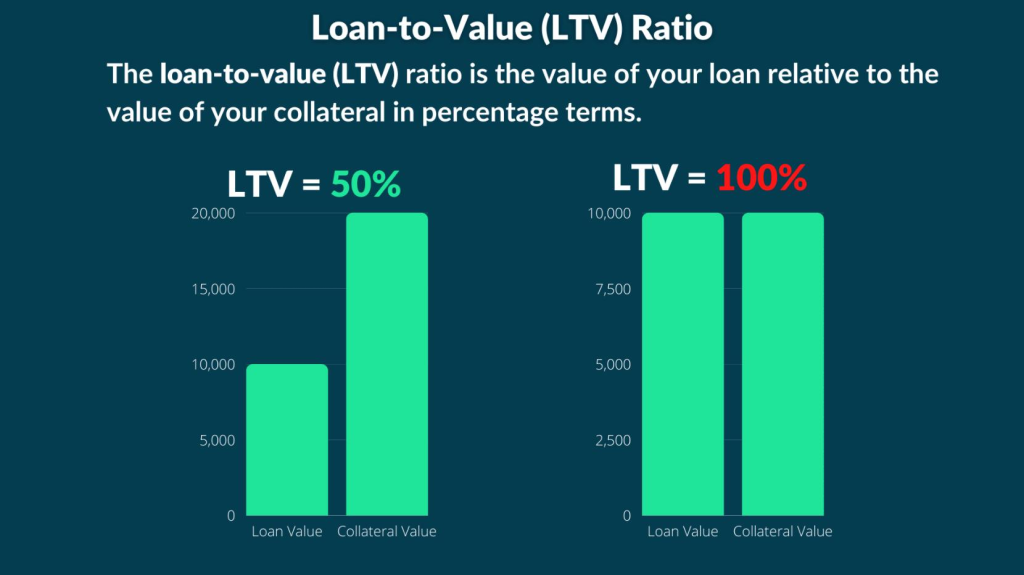
LTV is dynamic — it updates continuously as BTC’s price moves. At BetterLending, a margin call notification is issued when LTV approaches 75%. The borrower has 24–72 hours to respond by adding collateral, partially repaying the loan, or both. Liquidation — automated sale of collateral to cover the outstanding loan balance — executes at approximately 85–90% LTV if the margin call is not addressed.
Why Segregation Makes Liquidation Predictable
On a pooled-custody platform facing liquidity stress, a margin call scenario can become unpredictable: other borrowers may be withdrawing simultaneously, the platform may be freezing operations, and the automated liquidation process may be paused or delayed. On BetterLending’s segregated model, the margin call and liquidation process runs against the specific wallet assigned to the borrower’s loan — independent of the platform’s overall liquidity state. Liquidation is driven by market conditions, not by platform cashflow. This is the operational benefit of segregation beyond insolvency protection.
Stress Scenario: 50% BTC Drop on Segregated vs. Pooled Custody
Starting Position
Assume BTC at $100,000 and a $35,000 loan against 1 BTC — 35% entry LTV on BetterLending. On a pooled-custody platform, the same borrower holds a contractual claim to 1 BTC, but the asset is commingled with hundreds of other borrowers’ deposits.
50% BTC Price Decline ($100K → $50K)
At 35% entry LTV, a 50% BTC decline pushes LTV to 70% — no margin call triggered on BetterLending. The segregated wallet holds 1 BTC, now worth $50,000. The loan outstanding is $35,000. The buffer between current LTV (70%) and margin call threshold (75%) is 5 percentage points — tight, but survivable without action. The borrower can choose to top up collateral or hold, with the liquidation threshold still 15–20 percentage points away.
The Pooled-Custody Difference
The same 50% BTC decline that creates a manageable margin call situation on BetterLending may trigger a platform-level liquidity crisis on a pooled-custody lender. If the platform’s rehypothecated collateral is locked in a protocol experiencing withdrawal pressure, the platform may freeze withdrawals to stabilise — preventing the borrower from adding collateral or repaying. The margin call becomes unresolvable not because the borrower lacks funds, but because the collateral is operationally inaccessible. Segregated custody eliminates this scenario entirely: the wallet is isolated from platform liquidity dynamics.
60% BTC Decline on a Conservative Entry LTV
A borrower entering at BetterLending’s conservative 30% LTV with 1 BTC at $100,000 has $30,000 outstanding. A 60% BTC decline drops collateral value to $40,000 — LTV rises to 75%. Margin call territory — but not liquidation. The borrower has time and the collateral is ring-fenced. On a 65% entry LTV pooled-custody platform, the same 60% decline produces 162.5% LTV: total collateral loss through forced liquidation, with no recovery. Learn How to Structure Crypto Loan for Long-Term Survival in 2026
Rehypothecation vs. Segregated Custody
What Rehypothecation Means in Practice
Rehypothecation is the practice of reusing posted collateral — lending it to a third party, posting it as security for the platform’s own borrowings, or deploying it into yield-generating protocols. Platforms that rehypothecate use borrower collateral as a revenue source. A platform receiving 1 BTC as collateral may earn 5–8% annual yield by lending it to institutional counterparties. This yield can subsidise lower borrowing rates for the platform’s loan products.
The risk is structural: the platform now has a liability to return 1 BTC to the borrower and an asset that is the counterparty’s promise to return 1 BTC to the platform. If the counterparty defaults — or if the DeFi protocol holding the collateral is exploited — the platform has a gap between what it owes borrowers and what it can recover. That gap surfaces as withdrawal delays, partial recoveries, or insolvency. Read more; What Is Rehypothecation in 2026? Learn why BetterLendingnet Doesn’t Do it
Segregated Custody as the Structural Opposite
BetterLending’s no-rehypothecation policy means the 1 BTC deposited stays in the assigned wallet. No counterparty has a claim to it. No third-party failure can create a recovery gap. The collateral is a single-entry liability: BetterLending owes the borrower 1 BTC on repayment, and 1 BTC sits in the wallet. The accounting is closed. Segregation and no-rehypothecation together mean there is no hidden chain of obligations connecting the borrower’s collateral to external risk.
The Custody Trade-Off Model: Cost vs. Structural Risk
Rehypothecation-based platforms can offer borrowers lower interest rates — because the yield earned on redeployed collateral subsidises the cost of lending. Platforms like Ledn have offered tiered products: a lower-rate tier where collateral is rehypothecated (Ledn’s B2X product) and a higher-rate tier where it is not. The rate difference between rehypothecated and non-rehypothecated products has historically ranged from 2–3% APR on comparable loan sizes.
The trade-off is explicit: a borrower choosing the rehypothecated tier saves 2–3% annually in interest but accepts a second risk layer — counterparty exposure from the redeployment of their collateral. On a $100,000 loan, a 2% rate difference saves $2,000/year. A single counterparty default that makes 30% of rehypothecated collateral unrecoverable costs $30,000. The breakeven on rate saving vs. collateral loss risk is 15 years — assuming the platform maintains solvency throughout. Most borrowers are not pricing this trade-off consciously. Custody structure makes it explicit.
BetterLending’s no-rehypothecation model sits at the higher-rate, lower-structural-risk end of this spectrum. The cost is a modestly higher APR. The benefit is that the collateral is never exposed to third-party failure, regardless of what counterparties the platform engages with for its own operations.
The Institutional Funding Layer
Many crypto lending platforms fund loan disbursements through institutional capital partners — credit funds, banks, or family offices that provide the fiat or stablecoin lent to borrowers. In some structures, the Bitcoin collateral is re-posted — or “reposted” — to these institutional partners as security for the capital they provide. This creates a dual custody arrangement: the borrower’s collateral technically secures not just the loan, but also the platform’s obligation to its capital partner.
In a well-structured segregated model, collateral reposted to institutional partners is ring-fenced under documented legal agreements that preserve the borrower’s ultimate claim. In a poorly structured or pooled model, the institutional partner may hold a senior claim to the collateral that supersedes the borrower’s interest in an insolvency event. The borrower has no visibility into this layer unless it is explicitly disclosed in the platform’s terms of service.
BetterLending’s segregated custody model is designed to ensure that collateral handling — including any institutional arrangements — does not create a senior third-party claim on the borrower’s specific deposit. The legal protection flows from the segregation: collateral assigned to a specific wallet cannot be claimed by parties whose claim arises from a different agreement.
Platform Comparison: Custody Structure Across Ledn, Nexo, Nebeus, Youhodler, BetterLendingnet and Unchained
Among the major lending platforms in 2026, custody structure varies significantly and is rarely disclosed prominently. Ledn operates a tiered model: its standard loan product uses pooled custodial custody, while certain higher-rate products offer non-rehypothecated options — borrowers must actively select and verify which tier applies to their collateral. Nexo operates a fully centralised, pooled custodial model with rehypothecation terms embedded in its service agreement; the platform has faced regulatory scrutiny across the EU, UK, and US, adding regulatory risk alongside custody risk. Nebeus and YouHodler both operate pooled custodial models with no explicit prohibition on rehypothecation, and both offer LTV ceilings up to 70–90% — a combination of high custody risk and compressed liquidation buffer that is structurally incompatible with passive, long-term collateral holding. Read Crypto Tax UK: Expert Guide 2026
BetterLending and Unchained are the only platforms in this comparison with explicit no-rehypothecation policies and non-pooled custody. Unchained’s multisig model distributes key control: the borrower holds one key, preventing unilateral movement of collateral by any single party. BetterLending’s segregated model achieves account-level isolation without requiring borrowers to manage private keys — delivering comparable insolvency protection with lower operational complexity. For most long-term BTC holders, BetterLending’s structure represents the most accessible combination of custody protection and conservative LTV available.
Failure Modes: How Borrowers Lose Collateral
Failure Mode 1: Price-Triggered Liquidation From High Entry LTV
At 70% entry LTV, a 20% BTC price decline pushes LTV to 87.5% — past the liquidation threshold on most platforms. Liquidation executes automatically within hours. The borrower receives residual collateral value after the loan is repaid — but at a price 20% below entry, often during peak volatility. This is a pure structural failure: the entry LTV left no buffer. Segregated custody does not solve this. Only conservative entry LTV does.
Failure Mode 2: Insolvency on a Pooled-Custody Platform
A borrower at 35% LTV on a pooled-custody platform has a wide price buffer — a 50% BTC decline still keeps LTV below liquidation thresholds. But if the platform enters insolvency, that 35% LTV position becomes an unsecured creditor claim. The borrower’s collateral joins the bankruptcy estate. Recovery timelines run 1–3 years; recovery rates range from 20–70 cents on the dollar depending on the platform’s liability structure. Conservative LTV is irrelevant to this failure mode. Segregated custody eliminates it.
Failure Mode 3: Rehypothecation Liquidity Gap
A platform rehypothecates 80% of collateral into an institutional lending facility at 7% annual yield. The facility faces redemption pressure and can only return 60 cents on the dollar within 30 days. The platform now holds a $0.60 asset against a $1.00 liability to borrowers seeking collateral return. Even if the platform remains technically solvent, withdrawal delays, haircuts, or forced renegotiations follow. Borrowers on BetterLending — where collateral is never redeployed — have zero exposure to this chain of events.
Failure Mode 4: Regulatory Action Freezing Platform Operations
A regulatory enforcement action — licence revocation, asset freeze, or court-ordered operational suspension — can halt a platform’s ability to process withdrawals regardless of its financial health. In a pooled-custody model, commingled assets may be frozen as part of the action. In a segregated model, individually assigned wallets may be more defensible as borrower property rather than platform assets — a distinction that can determine whether borrowers access their collateral within days or years.
Further Reading on BetterLending
- Bitcoin loan platform comparison: LTV, custody, and rehypothecation explained
- What is rehypothecation? How it affects Bitcoin loan collateral
- BetterLending LTV calculator: estimate your liquidation buffer
- How to survive a Bitcoin bear market with an active loan
- Qualifying for a Bitcoin-backed loan: jurisdiction guide
Key Strategic Takeaway
Before evaluating interest rates, loan terms, or minimum collateral requirements, a borrower needs answers to three questions: Is collateral held in a segregated account or pooled? Is rehypothecation explicitly prohibited? Does the platform’s institutional funding structure create a senior third-party claim on collateral?
These questions matter more than APR because custody failure produces total collateral loss — not a partial cost. A 2% rate saving on a $75,000 loan over 12 months is worth $1,500. A single pooled-custody insolvency event producing a 40% recovery rate on $75,000 in collateral is a $45,000 loss. The risk asymmetry is 30:1 in favour of evaluating custody structure before evaluating cost.
BetterLending’s segregated custody model, no-rehypothecation policy, and 5–47% safe LTV range address all three layers of loan risk simultaneously — market risk through conservative LTV, platform risk through the margin call and liquidation structure, and custody risk through account-level segregation. Among actively lending platforms in 2026, this combination is rare. It is also the baseline that experienced BTC holders should require before posting collateral.
Apply for a Bitcoin-Backed Loan With Segregated Custody
BetterLending offers Bitcoin-backed loans from 5–65% LTV with individually segregated collateral accounts, no rehypothecation, and transparent loan mechanics. View rates and apply at BetterLending.net.
Frequently Asked Questions
What is segregated custody in a Bitcoin-backed loan?
Segregated custody means each borrower’s Bitcoin collateral is held in a separately identified wallet or sub-account, legally and operationally distinct from the platform’s own assets and other borrowers’ deposits. In a platform insolvency event, segregated collateral is not part of the platform’s balance sheet and cannot be claimed by other creditors. This is the structural opposite of pooled custody, where all collateral is commingled and becomes a platform liability the moment it is deposited.
Can collateral be reused after deposit on BetterLending?
No. BetterLending explicitly prohibits rehypothecation — deposited Bitcoin is not lent to third parties, posted to institutional partners as security, or deployed into yield protocols. The collateral remains in the assigned segregated wallet for the full loan term. This policy eliminates the counterparty exposure that arises when platforms redeploy collateral and a downstream counterparty defaults or becomes illiquid.
What happens to Bitcoin after it is deposited at BetterLending?
After deposit confirmation, the Bitcoin is assigned to a unique wallet linked to the borrower’s specific loan. The loan is then disbursed at the agreed LTV (5–65%, with 5–47% recommended as the safe range). During the loan term, the collateral wallet is monitored in real time. If LTV approaches 75%, a margin call is issued. If LTV reaches 85–90% without resolution, automated liquidation executes. On full repayment, the collateral is returned directly from the segregated wallet to the borrower’s withdrawal address.
Is Bitcoin safe in a BetterLending loan?
No custody model eliminates all risk. Price-triggered liquidation occurs if LTV exceeds approximately 85–90% — the result of a BTC price decline combined with insufficient collateral top-up. Fraud or operational failure by the platform operator could theoretically affect any structure. However, BetterLending’s segregated model eliminates the most common failure mode in crypto lending: platform insolvency converting collateral into an unsecured creditor claim, as occurred at Celsius, BlockFi, and Voyager. Combined with entry LTV in the 30–47% range, a borrower manages both price risk and custody risk simultaneously.
Does custody model affect liquidation thresholds?
Custody model does not change the LTV thresholds at which margin calls or liquidation occur. On BetterLending, margin calls trigger at approximately 75% LTV and liquidation at 85–90% LTV regardless of custody structure. What custody model affects is what happens if the platform becomes insolvent before liquidation is triggered — in a pooled model, the collateral may be frozen or claimed by creditors; in BetterLending’s segregated model, the collateral is legally isolated from that outcome. Custody risk and price risk are independent variables requiring independent mitigation.
What is the difference between segregated custody and multisig custody?
Segregated custody means collateral is held in individually assigned accounts controlled by the platform. The platform holds the private keys. Multisig custody — as implemented by Unchained — requires multiple key signatures to move BTC, with one key held by the borrower, preventing any single party from acting unilaterally. Both models provide strong insolvency protection. Multisig adds key-sovereignty control — appropriate for institutional holders or those prioritising direct key management. BetterLending’s segregated model delivers account-level ring-fencing with lower operational complexity, making it accessible for borrowers who do not wish to manage private keys directly.
What should a borrower evaluate about custody before taking a loan?
Three questions require written answers before depositing collateral. First: is the collateral held in an individually segregated account or in a shared pool? Second: is rehypothecation explicitly prohibited in the platform’s terms of service, not just in marketing materials? Third: does the platform’s institutional funding structure create any third-party claim on collateral that could supersede the borrower’s interest in an insolvency event? If any of these questions receives an ambiguous answer, treat the custody model as pooled and price the risk accordingly — which means factoring in the cost of potential insolvency-driven collateral loss, not just the APR.
